

Before You Cut Your Staffing Partner, Look at This First
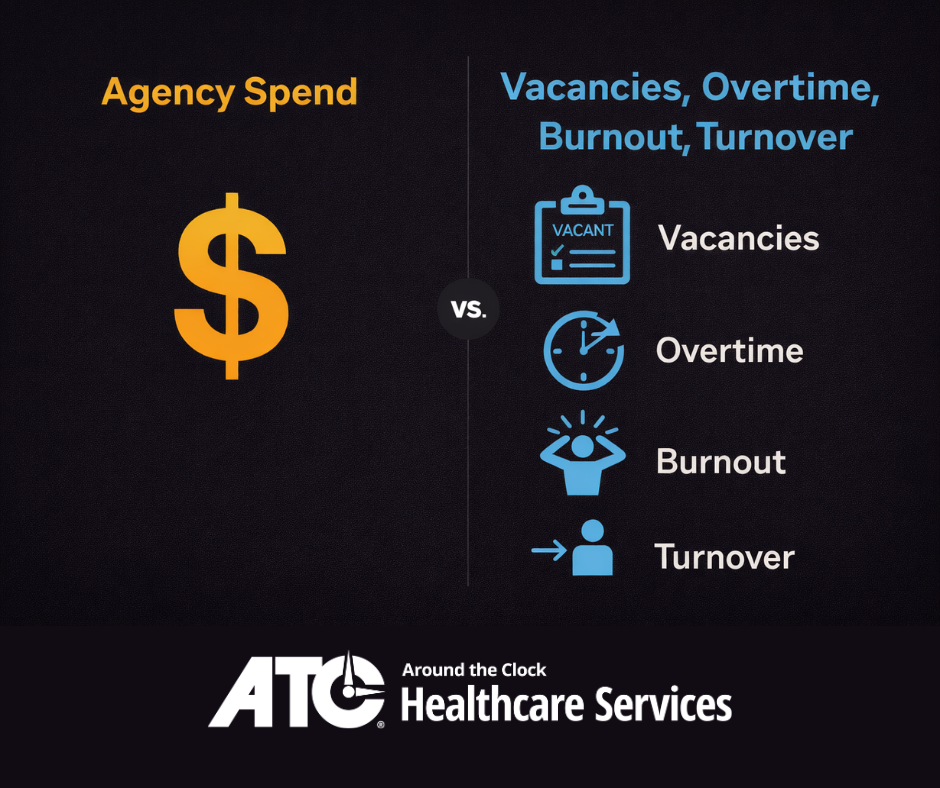
It’s budget season.
You’re in the thick of spreadsheets, cost centers, pressure from the top, and of course, someone’s eyeing that agency spend like it’s the villain of your bottom line.
We get it. On paper, it looks like an easy place to trim.
But before you go cutting your staffing partner out of your 2026 budget, pause. Take a breath. And ask a few critical questions that go beyond the dollar sign.
Cutting agency spend without a strategy can be a short-term win but with long-term consequences.
Start Here: What’s Actually Driving Your Staffing Costs?
Before you hit “delete” on that contract, check these metrics first:
1. Vacancy Rate
How many roles are sitting unfilled right now and how long have they been open?
Every vacancy puts more pressure on the staff who stayed. And the longer it drags on, the higher your risk of burnout, overtime, and even more turnover.
Agency staff aren’t a luxury – they’re how you stay above water when your hiring pipeline can’t keep up.
2. Attrition Rate
Are you losing people faster than you can replace them? Are they walking because of burnout, pay, scheduling, or support?
If turnover is high, cutting your only staffing safety net could make things worse.
3. Overtime and Burnout
Take a hard look at what you’re spending on overtime. Then ask: how much of that would drop if you had extra coverage?
Agency support protects the health (and sanity) of your internal team.
4. Time-to-Fill
How long does it take you to hire someone internally?
Now calculate the cost of that empty role for 30, 60, 90 days. Lost productivity, missed revenue, overworked staff, worse outcomes — they all add up.
Agency staffing fills the gap while you’re still reviewing resumes.
Need help dissecting your payroll and HR reports? Contact us now – we can help!
The Real Question Isn’t: “Can We Cut Agency?”
It’s: “What happens if we do and nothing else changes?”
If you don’t have a plan to:
-
Reduce vacancies
-
Hire faster
-
Improve retention
-
Lighten internal workload
…then removing agency support just means you’ll be asking fewer people to do more with less. Again.
Budgeting Smarter in 2026 Looks Like This:
-
Tracking vacancy trends before making cuts
-
Auditing OT spend + turnover as a combined cost center
-
Comparing staffing options by outcomes, not hourly rates
-
Building a flexible staffing strategy, not just a full-time headcount goal
Bottom Line:
You’re not spending too much on staffing.
You’re spending too much trying to survive short staffing.
Smart staffing isn’t a superfluous cost. It’s an investment in your people, your patients, and your outcomes.
Need help building a budget that actually works in 2026?
We’ve helped healthcare leaders across the country use flexible staffing to reduce burnout, improve coverage, and yes, save money in the long run.